

Judges' Comments
- N/A
Project Data:
Completion Date: 9/2/2013
Square Footage: 5300
Building Use: Child Development Center
Location: Oakland, CA
Project Description:
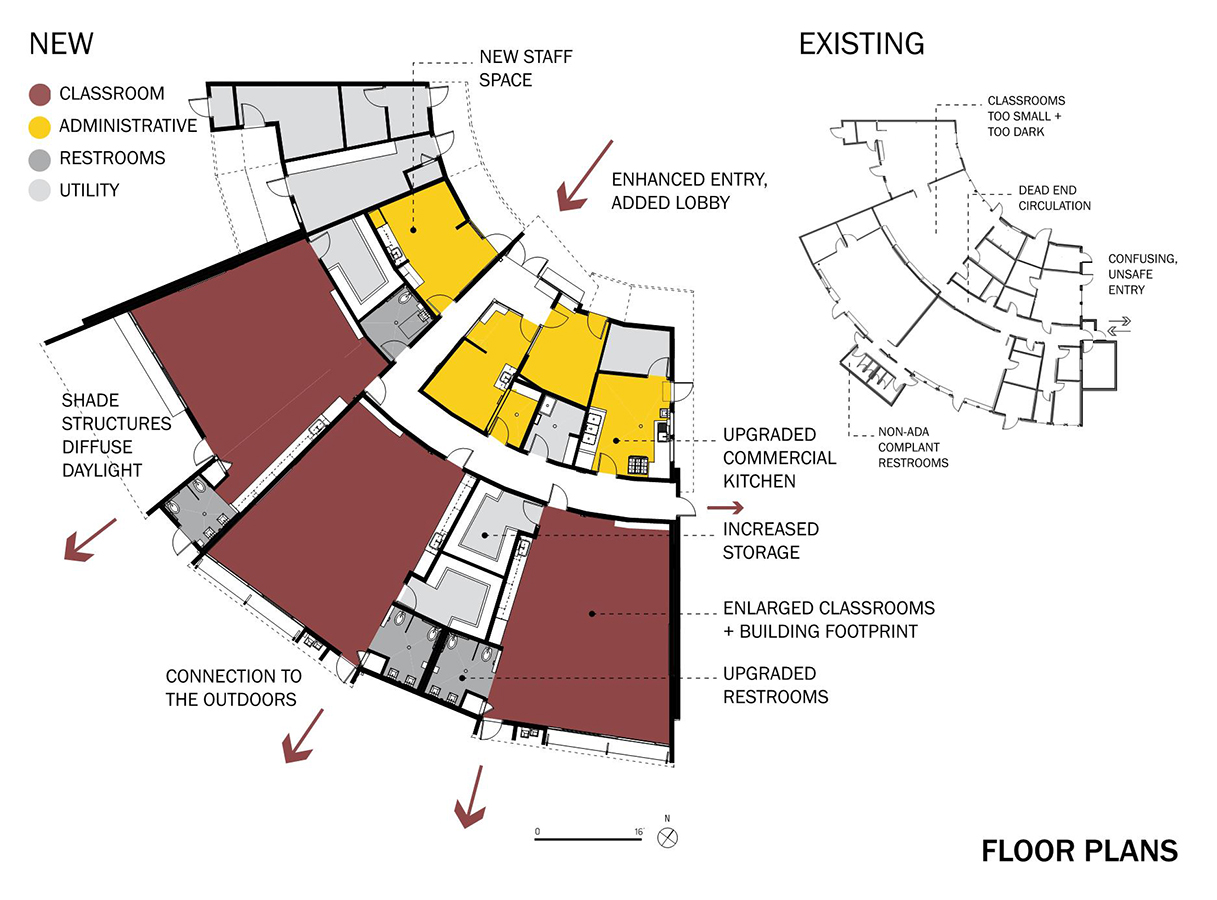
Located in East Oakland, the 1964 Arroyo Viejo Child Development Center had outgrown its useful life. Classroom sizes were insufficient, the kitchen was unimproved, and staff space was nonexistent. The most critical programming consideration required increasing the size of the classrooms to meet state licensing requirements. The existing classrooms varied in size from 440 square feet to 750 square feet, and have now been expanded to 1,000 square feet. One of the new classrooms can be split in half for enhanced programmatic flexibility.
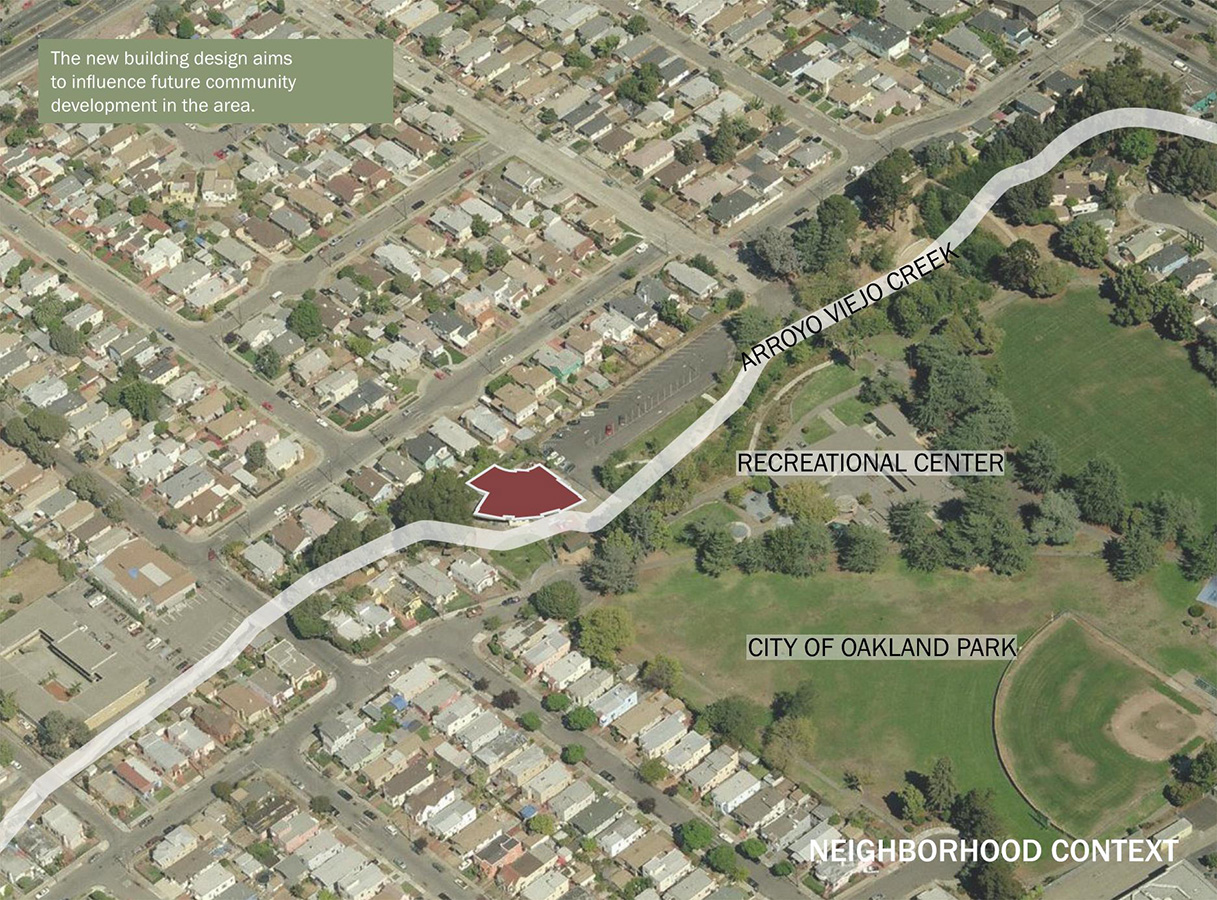
The planning process involved a project committee of District representatives, the head of District early childhood education, and the site administrator, ensuring a balance between the needs of the District and the functional needs of the site. The District was intent upon preserving and renovating the existing structure as a sustainable solution. As completed, the project brings a sustainable, educational, and inviting building to a severely under-served community.
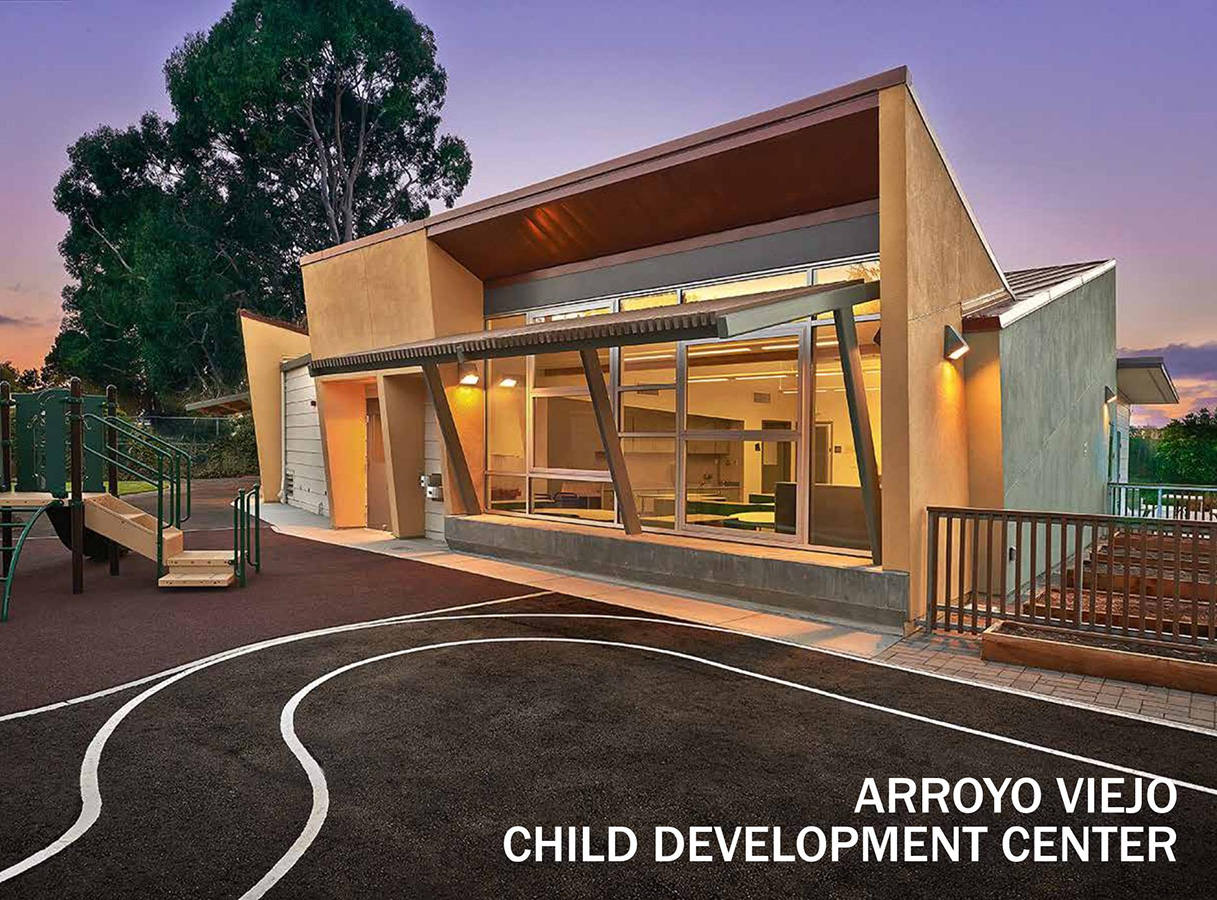
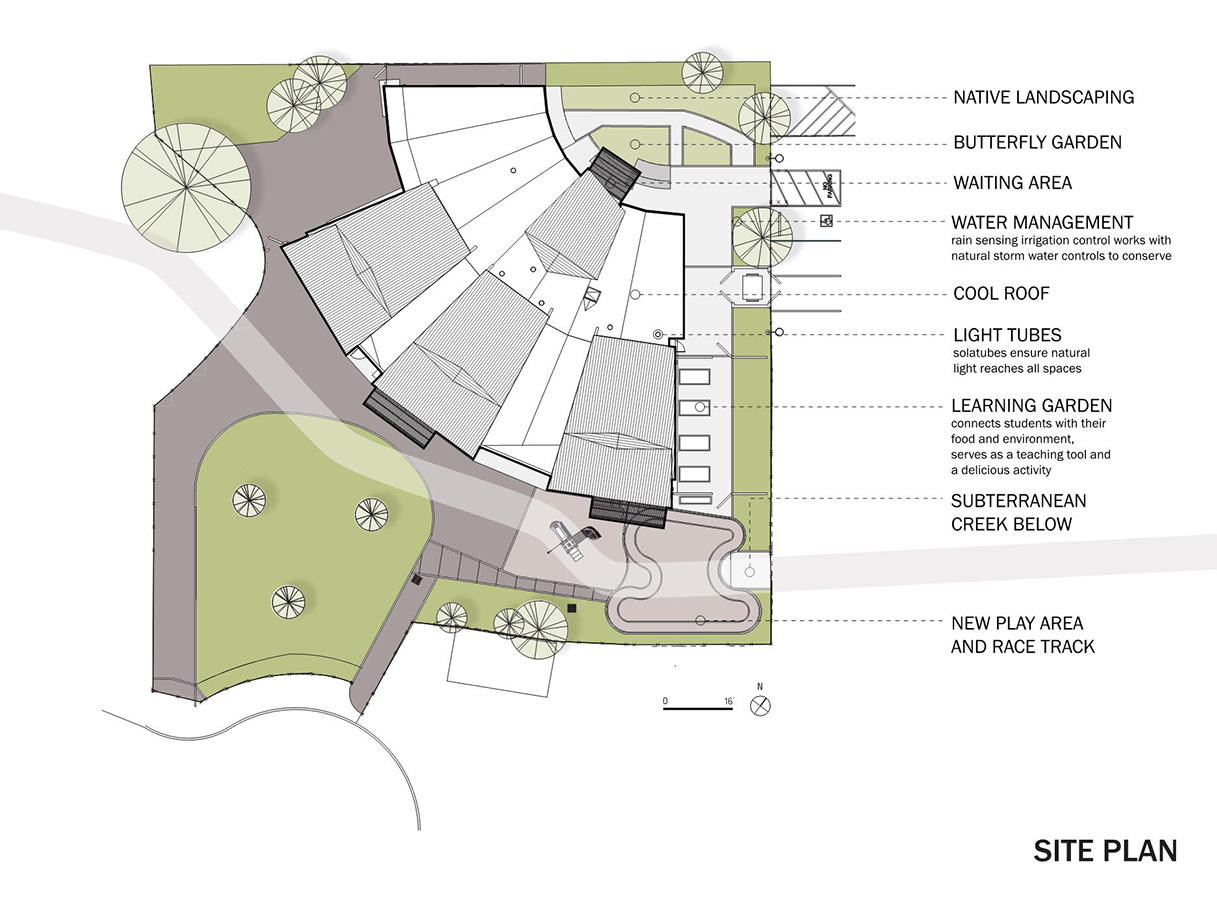
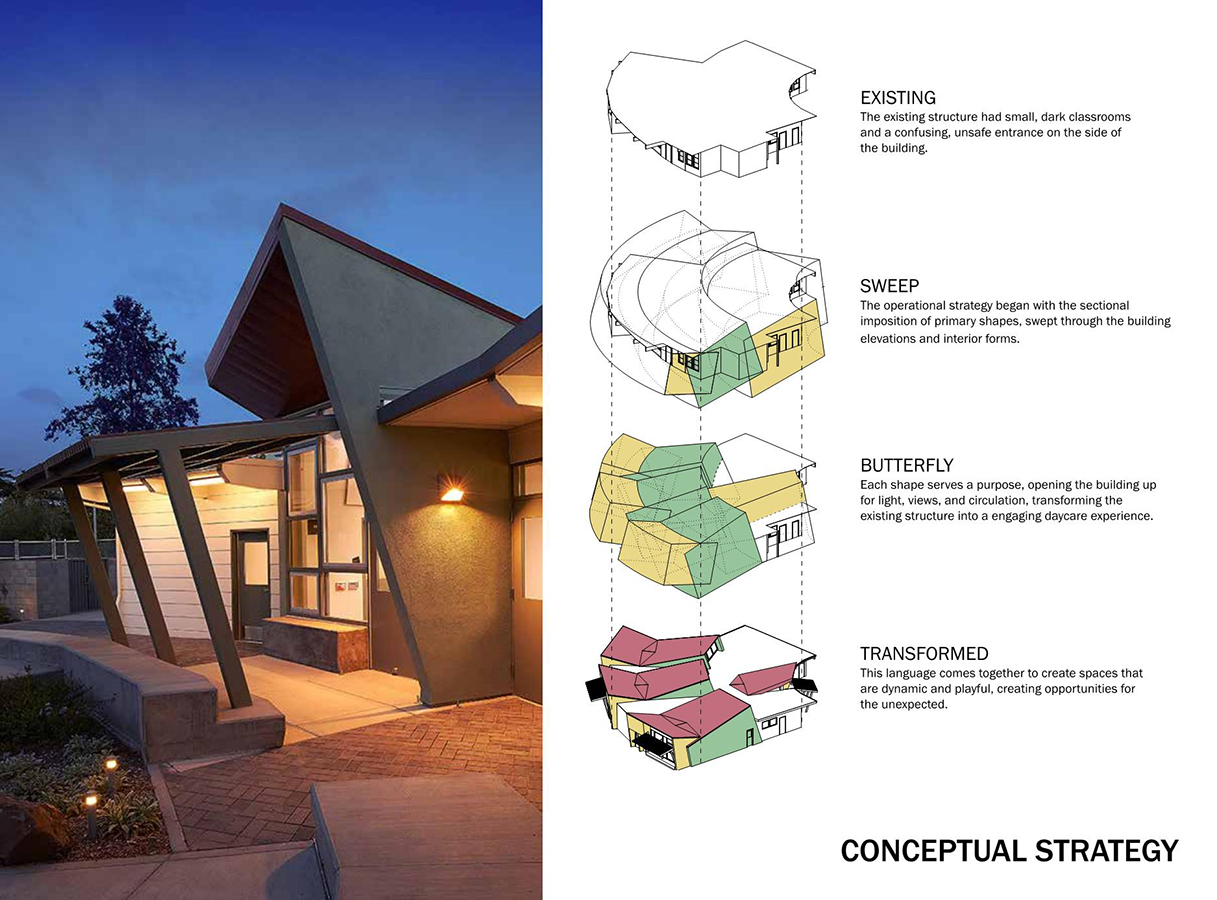
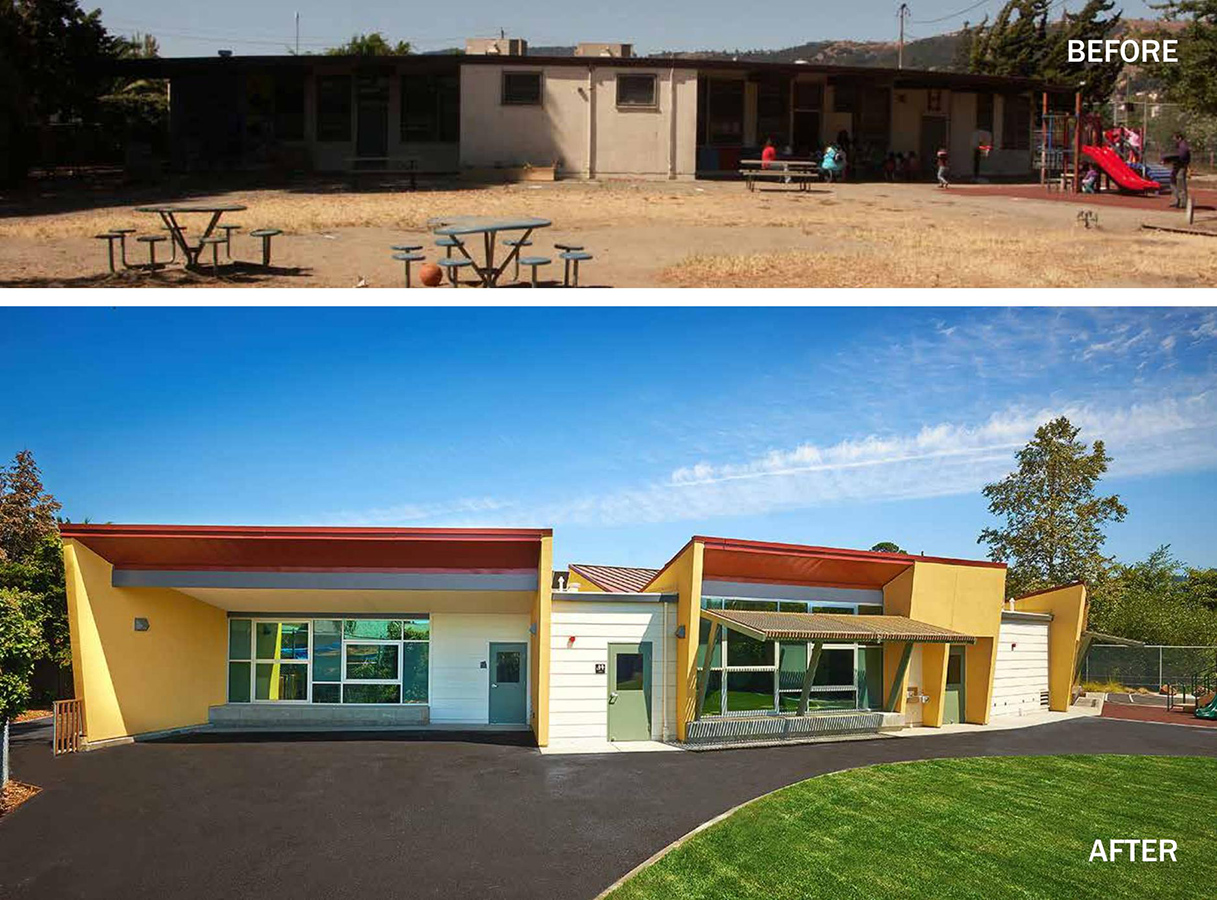
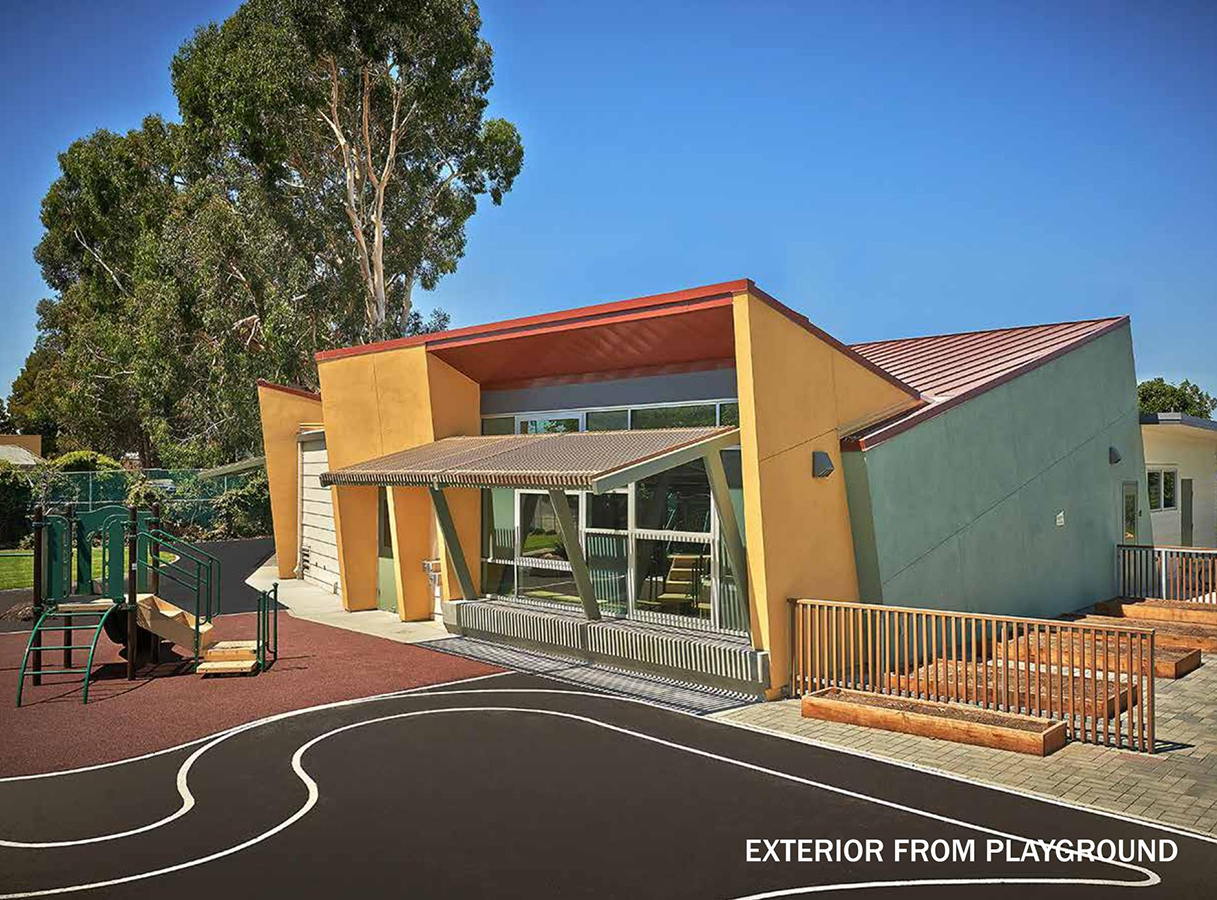
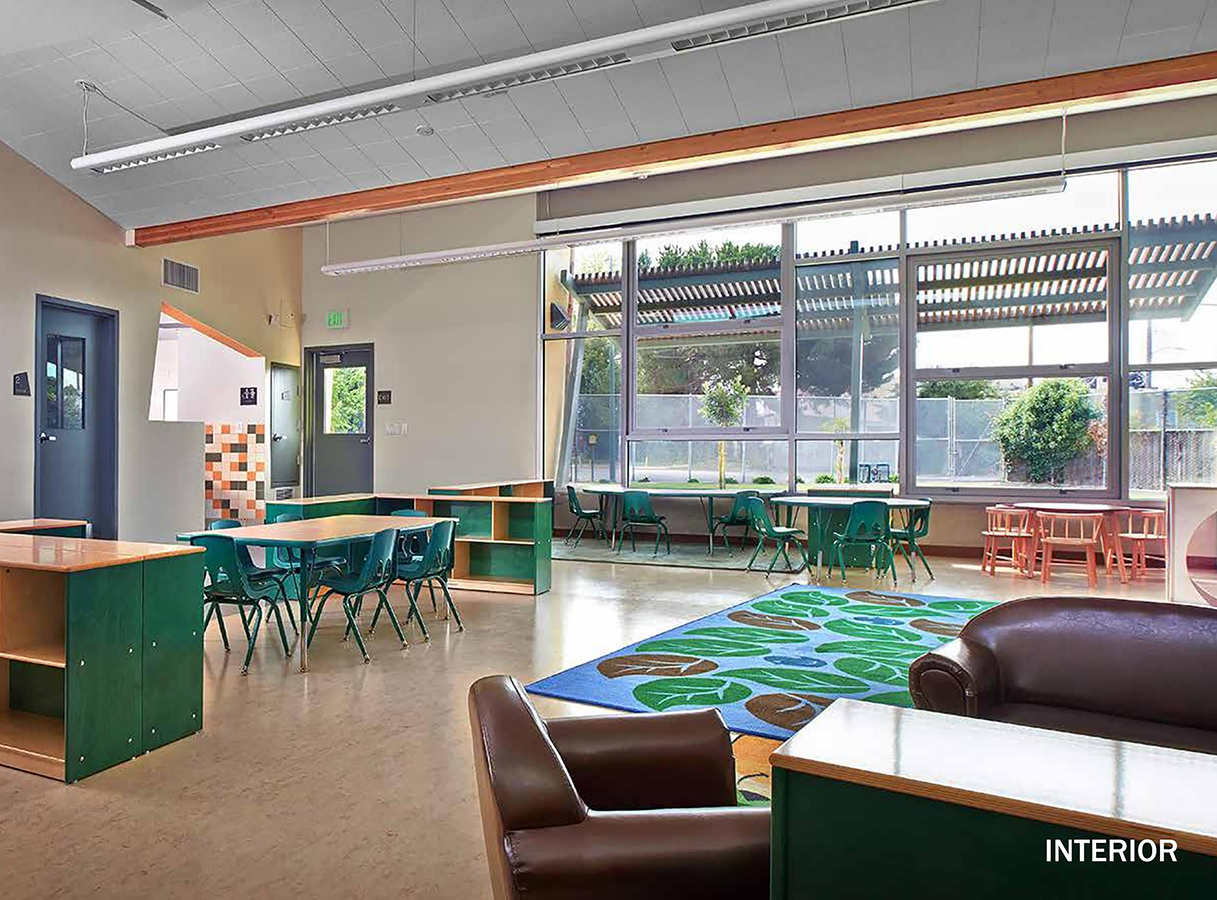
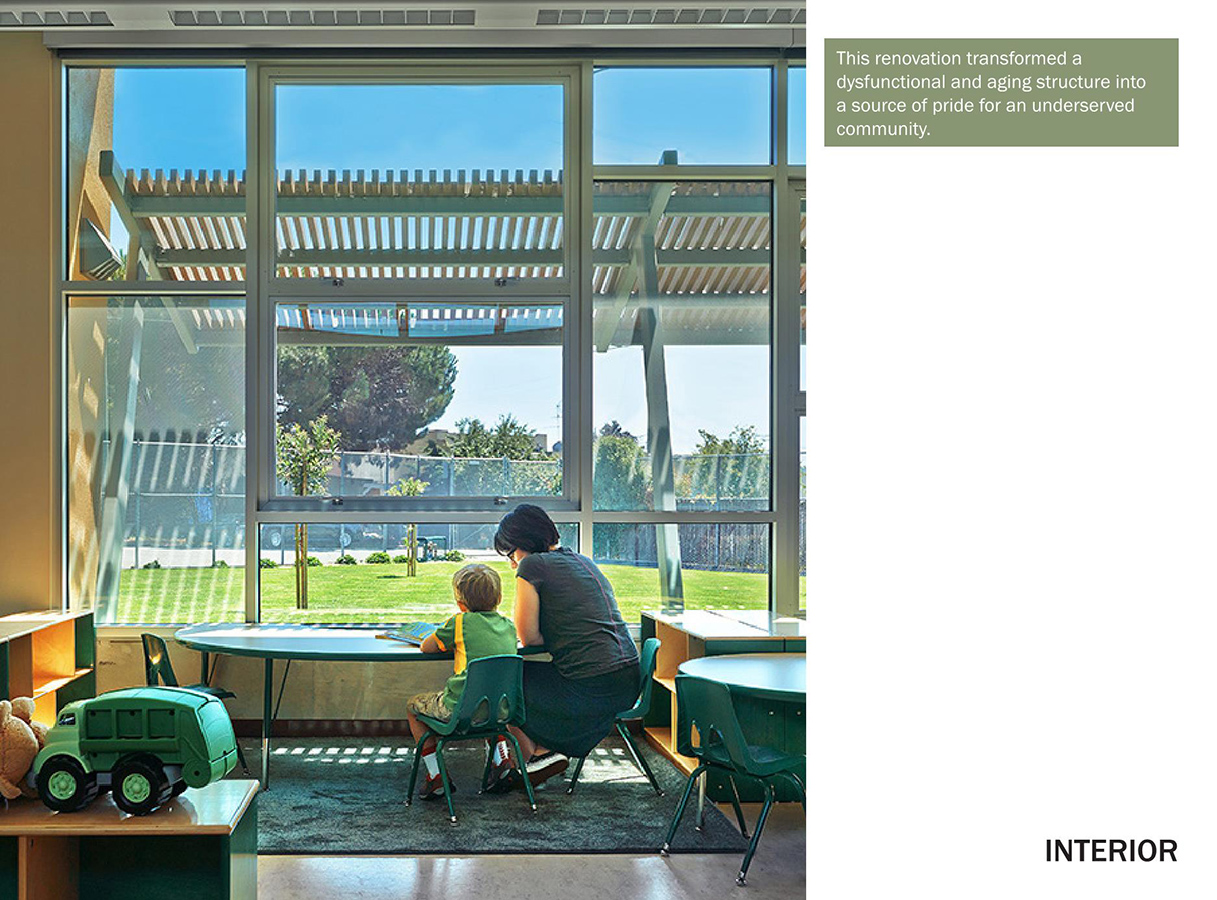
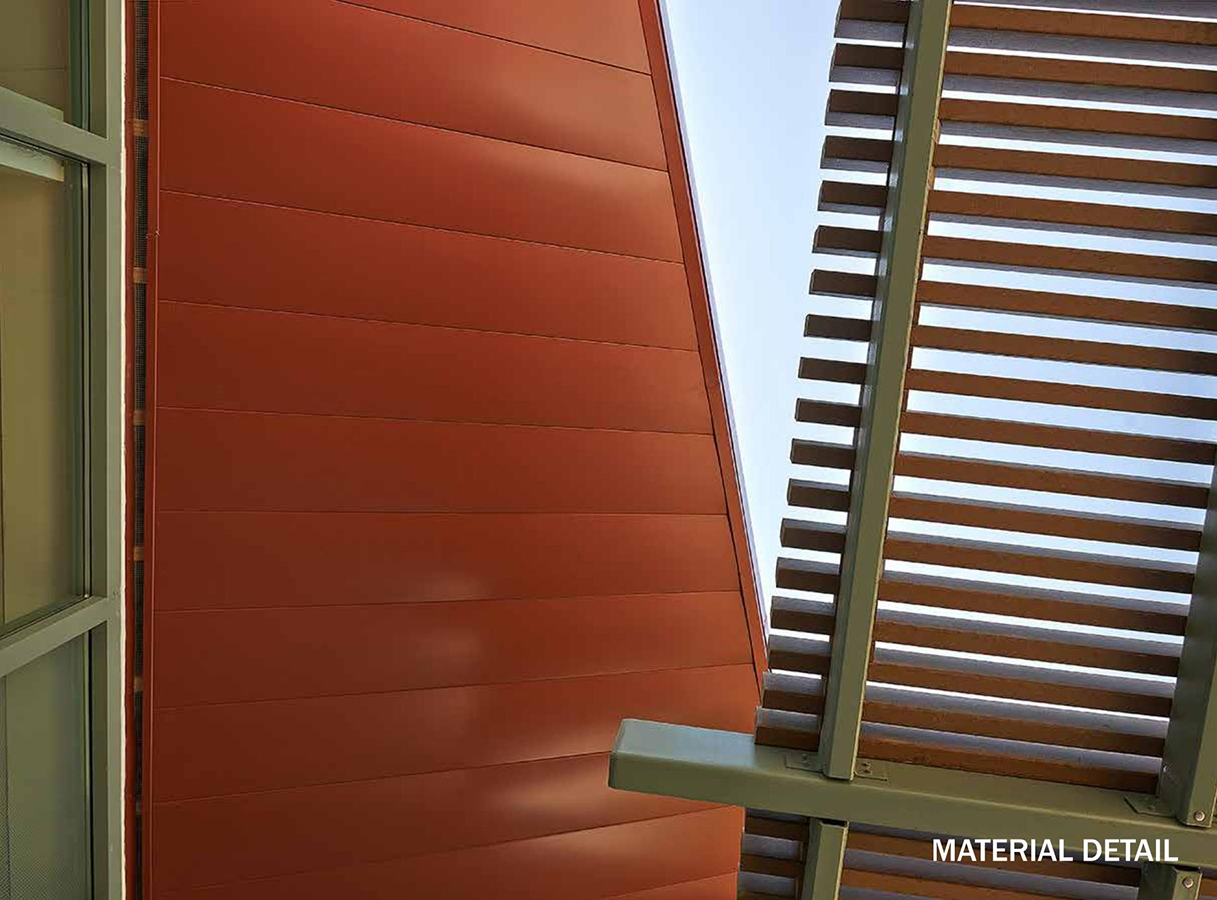
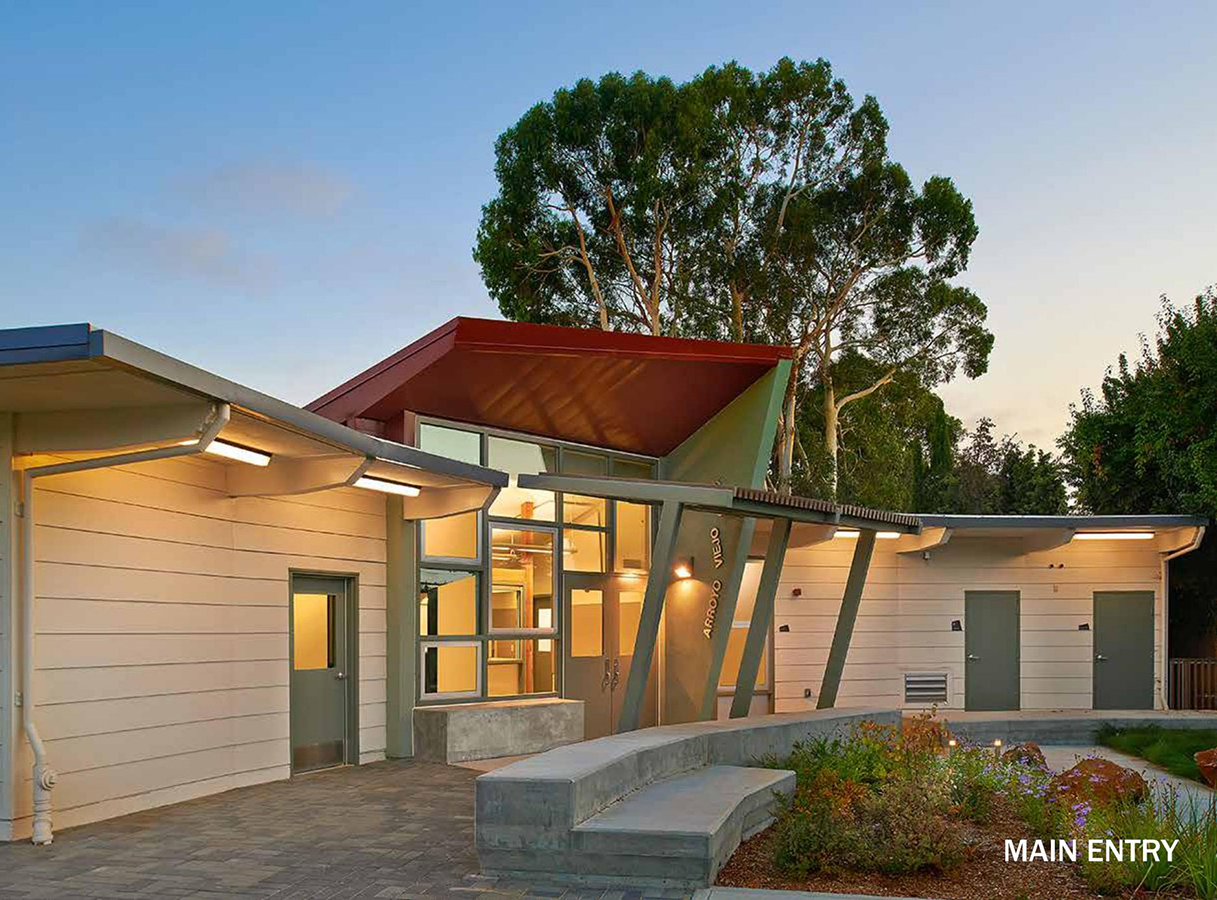
The primary success of the project comes from transforming the existing dark and aged facility into a light filled and energetic space for learning and exploration; a dramatic renovation within a tight budget of $2.855 million. The new floor plan expands staff space and improves the classroom organization and entry experience. The design strategy incorporates playful primary shapes, as expressed in the building elevation. Each shape improves building function through a visual connection to the outdoors and the play area, creates clerestory windows to let in balanced light and natural ventilation, and turns the new entrance into a focal point. The dynamic language of skewed and intersecting forms is carried throughout the building, from the suspended acoustical clouds to the landscape concentric plan and butterfly garden, which connects with an underground creek. An indoor / outdoor learning experience includes a learning garden, and provides a variety of opportunities for children to explore and engage in nature.
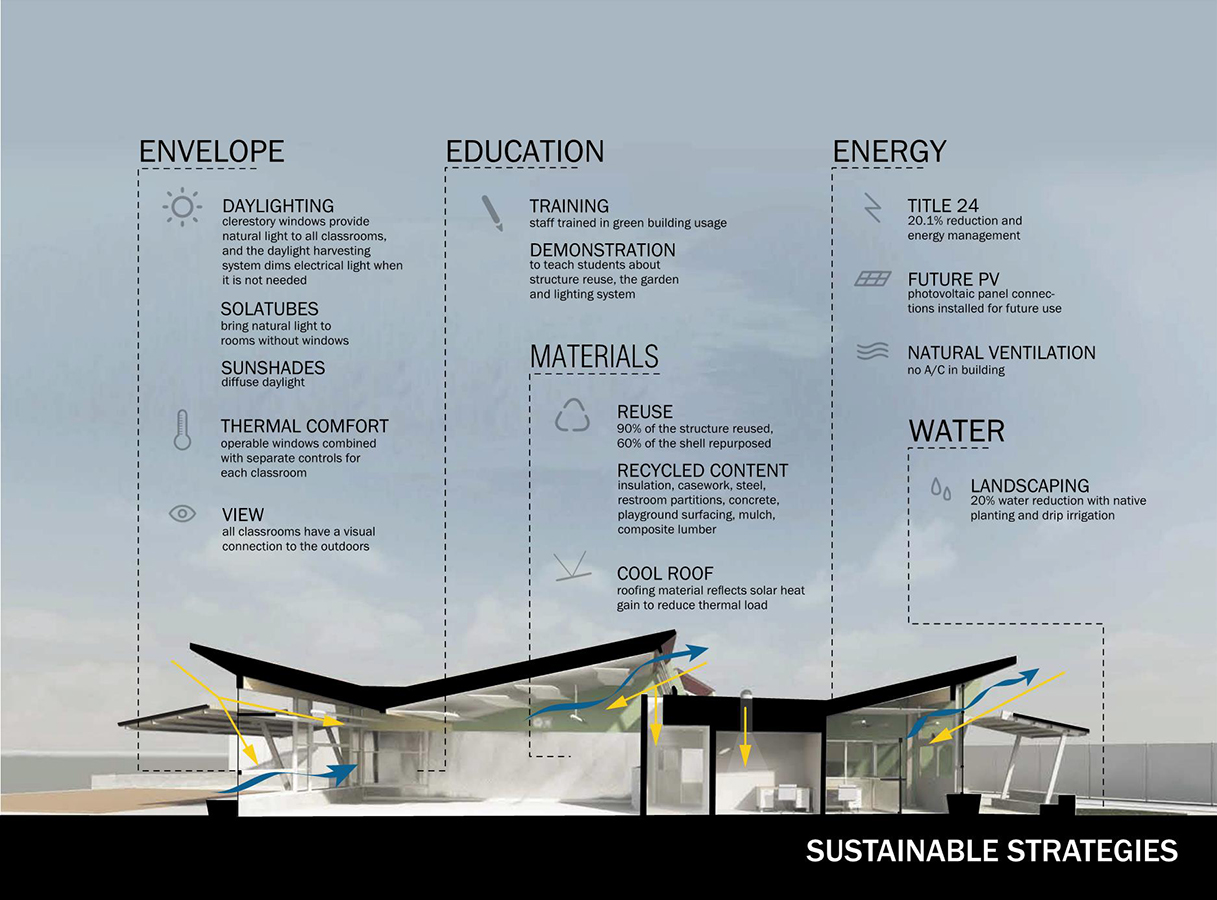
The new facility serves as an example of sustainability. It is CHPS self-certified, with greater than 20% energy use reduction beyond Title 24. Water management systems include rain-sensing irrigation controls, native landscaping, pervious paving and retention areas. Passive ventilation is achieved with natural ventilation through clerestory windows, creating an environment that requires no air conditioning. Classrooms utilize ambient light sensors and daylight harvesting for natural lighting. Recycling/waste diversion is enhanced through the reuse of existing glulam beams and 75% of the building shell, and diversion of 75% of construction waste from the landfill. Sustainable and healthy materials are included throughout the building with the extensive use of high recycled content materials, rapidly renewable finish materials and low-emitting adhesive, sealants, painting and coatings.
The upgrade of this facility has transformed a dysfunctional, aging structure into an asset and a source of pride for a community in need. This inspiring space provides a safe, unique, comfortable, and supportive environment for children to learn and play, initiates an encouraging beginning to the educational process for families within this inner-city community, and brings hope and opportunity to a new generation.
C.O.T.E. | Committee on the Environment
Submitted By: |
Dougherty |
Design Architect: |
Brian Paul Dougherty, FAIA, LEED AP |
Associate Architect or Firm: |
Dougherty 3194D Aiport Loop Drive Costa Mesa, CA 92626 714.427.0277 |
Landscape Architect: |
Landscape Architecture: MIG 800 Hearst Ave Berkeley, CA 94710 510.845.7549 |
Owner / Developer: |
Oakland Unified School District 1000 Broadway Suite 680 Oakland, CA 94607 Phone: 510.879.8200 |
Engineer: |
Civil Engineering: Wood Rogers 180 Grand Avenue, Suite 775 Oakland, California 94612 510.208.2400 Structural Engineering: KPFF 45 Fremont Street, 28th Floor San Francisco, CA 94105 415.989.1004 Mechanical / Electrical / Plumbing Engineering: TTG (Now IMEG) |
General Contractor: |
W.A. Thomas Co., Inc 2356 Pacheco Blvd, Martinez, CA 94553 925.228.9600 |
Consultant: |
Cost Consultant: Cumming 475 SANSOME STREET Suite 520, San Francisco, CA 94111 415-748-3080 |
Photographer: |
Kris Knutson 850 Greystone Court Gilroy, CA 95020 408.607.5566 kris@krisknutson.com |
Arroyo Viejo Child Development Center
Category
Commercial